



LA NOSTRA RICERCA
Our research helps us better understand the cetaceans that live in or visit the areas where we operate. We study which species are present, when they are here, and how they use their habitat throughout the year.
Using non-invasive methods such as photo-identification, we photograph natural features like dorsal fins and tail flukes to recognize individual animals—much like a fingerprint. This allows us to follow individuals over time, learn about their movements, family groups, and population trends, without ever disturbing them.
Every sighting adds to our growing catalogue, providing valuable information that supports long-term conservation and helps protect these incredible species for future generations. Guests participate in a model of responsible marine ecotourism where tourism supports science, and science supports conservation.
MAROCCO
General Cetacean Monitoring
The Strait of Gibraltar is one of the world’s most important marine corridors, connecting the Atlantic Ocean and the Mediterranean Sea. Its exceptional productivity attracts a remarkable diversity of cetacean species throughout the year, yet many aspects of their ecology and distribution along the Moroccan coast remain poorly documented.
Wise Whale Project aims to establish the first long-term, systematic cetacean monitoring programme in northern Morocco. Through dedicated research surveys, photo-identification and collaboration with local communities, we collect scientific data that directly supports conservation, education and responsible marine ecotourism.
Our research begins with systematic surveys throughout the Strait of Gibraltar and the northern Moroccan coastline. Every survey contributes valuable information on the occurrence and distribution of marine mammals in the region.
During each expedition we collect data including:
– Coordinates
– Species identification
– Group size and composition
– Behavioural observations
– Environmental conditions
– Human activities and potential threats.
Bottlenose Dolphin COEXISTANCE PROGRAMME
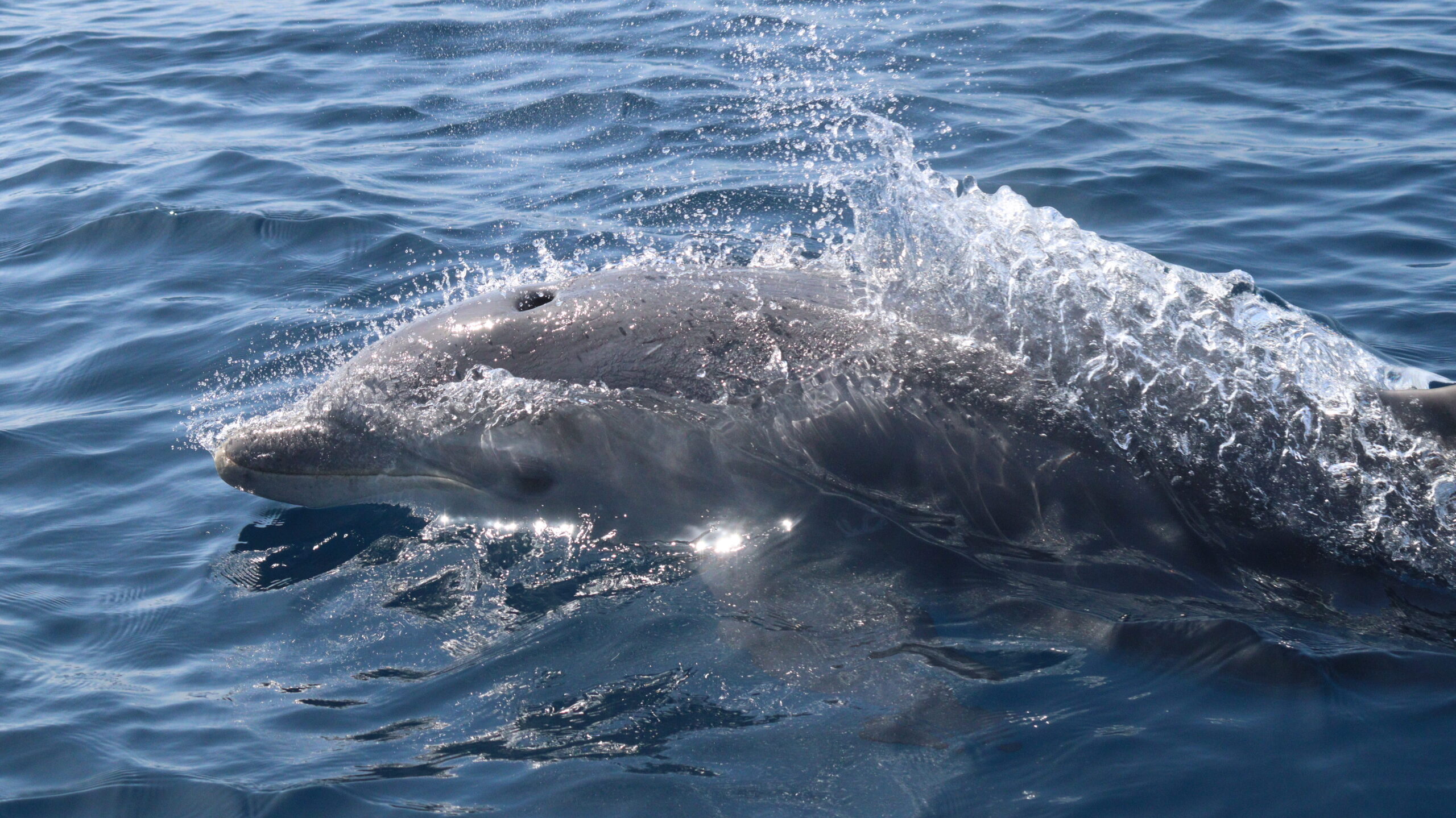
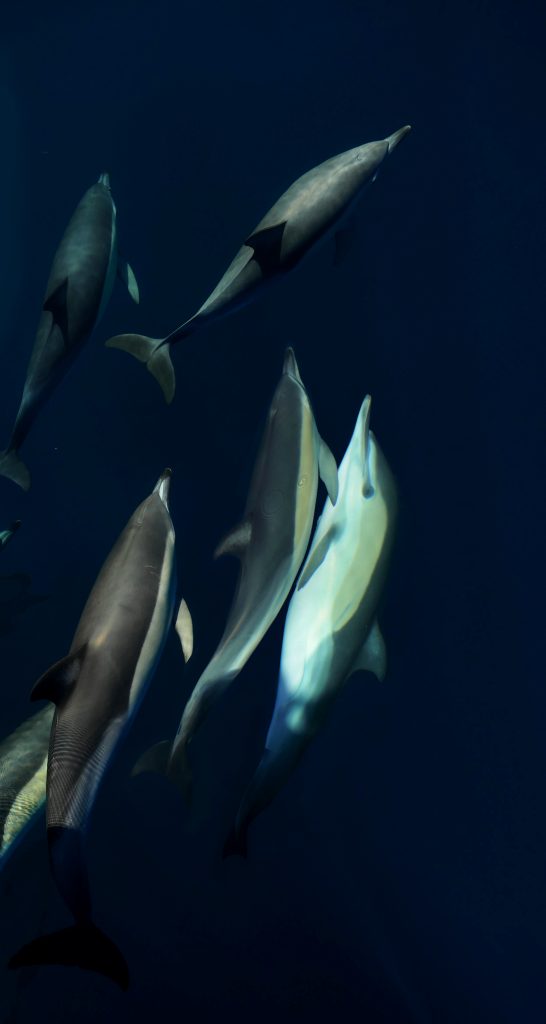
The bottlenose dolphin (Tursiops truncatus) is a frequently encountered species along the Moroccan coast. As of today, little information exists regarding the population structure and the interactions between dolphins and coastal fisheries.
This project focuses on:
– Photo-identification of individuals
– Estimating population size and site fidelity
– Mapping key habitats
– Monitoring social structure and behaviour
– Investigating interactions with artisanal fisheries
In this region, bottlenose dolphins are known to cause significant damage to fishing nets while feeding, creating economic losses for local fishermen. This conflict has become an increasing concern and has led to growing tension between fishing communities and dolphin conservation.
By understanding where these interactions occur, identifying the individuals involved and studying their behaviour, we aim to provide scientific evidence that supports practical, non-lethal mitigation measures, benefiting both local fisheries and dolphin conservation.
Iberian Orca Conservation PROGRAMME
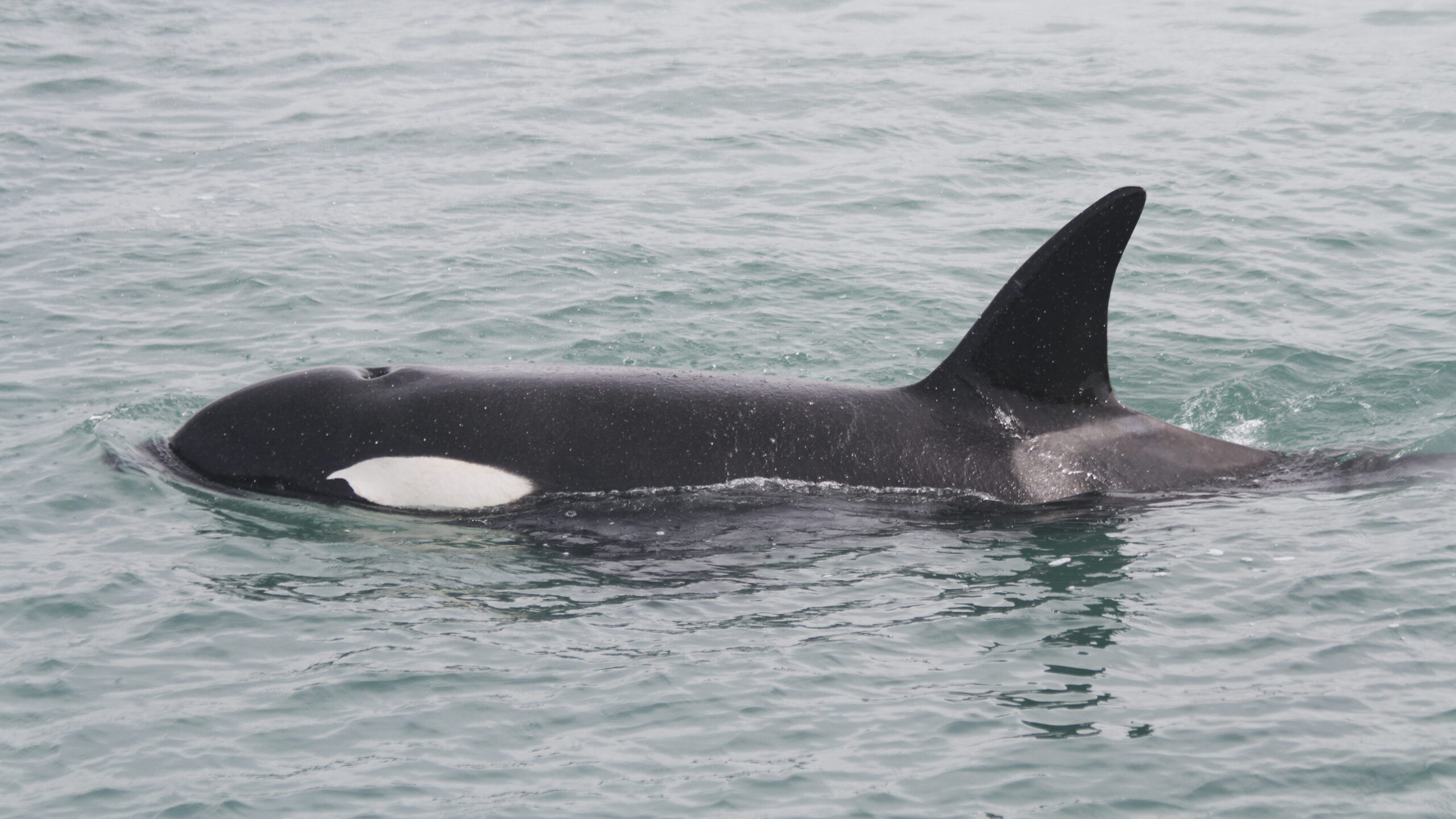
The Strait of Gibraltar is home to the Critically Endangered Iberian orca population (Orcinus orca), one of the smallest and most threatened orca populations in the world. We collaborates with Spanish conservation programmes to improve knowledge of these remarkable animals.
This work includes:
– Monitoring orca presence during the tuna migration
– Photo-identification of individuals
– Recording behaviour, group composition and movement patterns
– Contributing sightings to international research databases
– Sharing real-time sighting information with local sailors and fishermen to avoid interactions.
By helping to locate orca groups and communicating their positions, we aim to reduce the likelihood of negative interactions between orcas and vessels while improving safety for both people and wildlife.
Our objective is not only to support the conservation of this unique population, but also to replace fear and misinformation with scientific knowledge, education and cooperation between researchers, sailors and local fishing communities.